
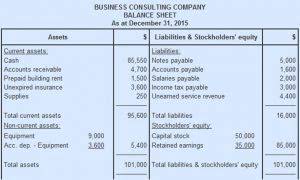
Consistency ensures that comparisons are accurate and meaningful, allowing for a clear understanding of trends and patterns over time. Conducting horizontal analysis of balance sheets helps assess a company’s financial position and changes in assets, liabilities, and shareholders’ equity over time. These metrics, along with others specific to the industry or company, provide valuable insights into a company’s financial performance and position when analyzed using horizontal analysis techniques.
Exploring Horizontal Analysis for Better Financial Insights

For companies with strong seasonality effects, like FMCG or tourism, horizontal analysis is very useful for comparing peak and off-peak performance. For example, a hotel chain could focus at summer sales to better plan staffing and inventory. When data is simplified into clear side-by-side comparisons, businesses can find trends and make informed decisions easier. By studying the financial data of industry leaders or successful competitors, businesses can gain insights into what works and what doesn’t in their industry and adjust their strategies accordingly.

Importance of Horizontal Analysis in Financial Statement Evaluation

In other words, vertical analysis can technically be completed with one column of data, but performing horizontal analysis is not practical unless there is enough historical data to have a useful point of reference. However, for the management and inventors to be able to make better-informed decisions an additional vertical analysis technique is necessary. Start by choosing the financial statements that are relevant to your analysis objectives. Consider which statements provide the most meaningful insights based on your analysis goals.
- In the end, compared to your competitors’ 15.3 percent increase, your humble 2.7 percent gain in GOP leaves a bitter aftertaste.
- As you can see there is a heavy focus on financial modeling, finance, Excel, business valuation, budgeting/forecasting, PowerPoint presentations, accounting and business strategy.
- Financial statement analysis is the process of examining a company’s financial statements to assess its financial health and performance.
- This can be used to compare different aspects of a company, such as sales, profits, and expenses.
- Despite several advantages, horizontal analysis has some limitations and disadvantages as well.
Key Metrics and Ratios in Horizontal Analysis
Generally, the technique helps in understanding the performance of a business to be able to make informed decisions. Horizontal analysis is a powerful tool for understanding and evaluating a company’s financial performance over time. By examining year-to-year changes in key financial metrics, you can identify trends, assess stability, and make informed business decisions. Remember to consider industry benchmarks, peer analysis, and best practices to ensure accurate and meaningful results. By incorporating horizontal analysis into your financial analysis toolkit, you can gain valuable insights https://www.bookstime.com/ into your company’s performance and drive strategic growth.
- Whether used for investment purposes or to improve business operations, horizontal analysis is essential for understanding a company’s financial health.
- For example, an analyst may get excellent results when the current period’s income is compared with that of the previous quarter.
- It expresses each line item as a percentage of a key figure, such as total revenue or total assets.
- Both these analyses mainly differ from each other in the calculation, focus, and time period that they both consider assessing the financial analysis.
- However, while there is no stipulation that a specific interval be used, it is important to be consistent.
- By its nature, horizontal analysis is useful to forecast future performance by analyzing how key metrics change over time.
It involves comparing historical data or line items by expressing the figures from each subsequent period as percentages of the base year or using absolute comparisons. In this section, we will explore how horizontal analysis horizontal analysis works and discuss the difference between percentage growth and absolute comparison methods. Horizontal analysis, also known as trend analysis, is a financial analysis method that compares financial data over multiple periods to identify trends, growth patterns, and changes in a company’s financial performance. This analysis helps stakeholders assess a company’s progress over time and make informed financial decisions. In conclusion, horizontal analysis is an essential tool for investors seeking to understand trends, identify growth patterns, and evaluate a company’s performance against industry benchmarks. By focusing on percentage changes over time, it enables easy comparison between financial statements and offers valuable insights into a business’s operational efficiency and financial health.
- This sort of study permits analysts to observe changes in various line items over time and project them into the future.
- No doubt then that the CEPS is given more importance by lending institutions in appraisal of creditworthiness of their clients.
- Let’s look at its example to ensure you understand the application of horizontal analysis.
- Conceptually, the premise of horizontal analysis is that tracking a company’s financial performance in real time and comparing those figures to its past performance (and that of its industry peers) can be very practical.
- After analyzing the cash flow statement over multiple periods, businesses highlight the trends in cash flow and changes in the company’s ability to generate and manage cash.
- In that case, it may indicate that the company needs to focus on cost control measures.
- By selecting a beginning period with particularly inferior performance, analysts can sometimes create the impression that the business is doing better than it is.
Comparing Financial Performance to Industry Averages

This process helps understand whether a company’s performance improves, declines, or remains steady. Yes, it can help investors compare the financial performance of different companies within the same industry by highlighting similarities and differences in their growth patterns and profitability. Horizontal analysis compares line items or ratios across different accounting periods by expressing them as percentages of the base year’s amounts, enabling easy detection of trends and growth patterns. Despite these criticisms, horizontal analysis remains a valuable tool for investors and analysts looking to understand trends, Catch Up Bookkeeping patterns, and growth within financial statements over multiple periods. However, it is important to remember that horizontal analysis has its limitations.
